AI Just Became Part of the Job
What the new PMI standard means for construction PMs.
For years, artificial intelligence in construction project management was treated like an optional side project. It was the playground of the tech-curious, something to experiment with if you had extra time, using off-the-shelf tools to draft a quick email or summarise a lengthy PDF.
That era is officially over.
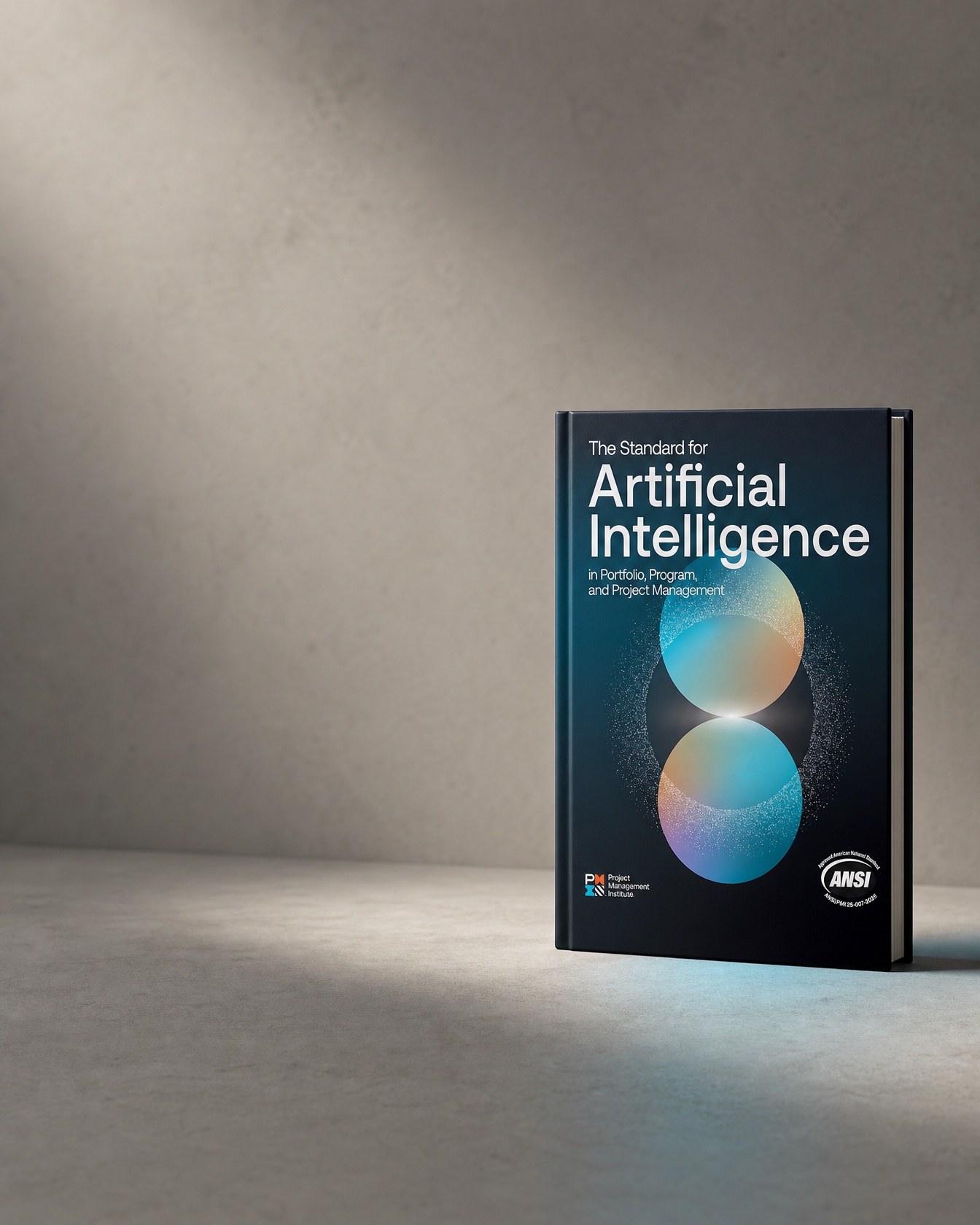
With the release of the Project Management Institute's new Standard for Artificial Intelligence in Portfolio, Program, and Project Management, AI has transitioned into an ANSI-approved national standard. It is no longer an experiment; it is a professional baseline. The industry framework has shifted from asking if you use AI, to demanding to know how responsibly you are governing it on your projects.
For construction project managers, this requires an immediate evolution from administrative oversight to strategic data governance. Five critical shifts must be mastered to navigate this new era.
From administrative oversight to data governance.
Data readiness is the foundation
AI capability is entirely dictated by the quality and structure of the underlying data.
If you have messy data, AI will only help you make bad decisions faster. You cannot deploy reliable predictive scheduling or automated cost forecasting if your records are fragmented. Before automating a single workflow, project managers must standardise cost codes, unify Work Breakdown Structures, and align reporting periods across all contractors and subcontractors. It is time to audit project records and permanently retire the siloed, non-standardised spreadsheets.
Humans decide, by design
Human oversight must be deliberately engineered into the project workflow, not tacked on as an afterthought. AI assists; people decide.
Imagine a predictive model analyses your project pipeline and flags a 40% probability of missing a critical-path milestone due to supply chain volatility. That percentage is an input, not a final verdict. The PM's role is to interpret that signal, weigh the commercial recovery options, evaluate site safety, and ultimately own the decision on budget commitments. AI surfaces the risk, but leadership remains entirely human.
Shut down shadow AI
Governing AI deployment is a core professional responsibility. Unsanctioned tool usage introduces severe liability.
When site engineers, contract administrators, or subcontractors quietly paste RFIs, proprietary designs, or sensitive site logs into unauthorised, public AI applications to save time, they are leaking commercial data. This shadow AI creates massive legal and financial exposure. Project managers must establish, communicate, and strictly enforce a defined, approved AI toolset for the entire jobsite.
Explainability is commercial defence
AI outputs must be fully transparent and explainable. The reasoning behind an AI-driven conclusion cannot be a hidden black box.
Every major project forecast, delay projection, or budget adjustment carries immense contractual weight. If you submit an Extension of Time claim or defend a cost overrun, “because the AI said so” will not hold up with owners, lenders, or legal teams. PMs must use tools that explicitly surface their underlying drivers, such as shifting schedule logic or verified material delivery trends, so that decisions remain contractually defensible.
Competence across the portfolio
AI fluency must extend beyond isolated tasks and span the project, program, and portfolio levels.
True AI competency means moving past basic administrative automation, like summarising meeting minutes. In a modern construction landscape, PMs need to leverage AI to evaluate live performance across multiple builds simultaneously. This involves analysing portfolio-wide intelligence to spot systemic subcontractor delivery failures, optimise heavy equipment allocation across different regions, and catch recurring design flaws before they ever reach an active site.
The message embedded within the new ANSI-approved standard is clear.
“AI won't replace the project manager. But the project manager who governs AI will replace the one who doesn't.”
This standard fundamentally reframes the construction PM's role. Success is no longer measured just by tracking a static spreadsheet; it is defined by strategic leadership over data integrity, risk mitigation, and technology governance.
Does your current project pipeline have a clear AI governance plan? I would be glad to compare notes on how teams are preparing for this shift.