Designing for your absence.
The hardest communication problem in architecture is making a design legible enough to survive without you. Here is the framework, drawn from the man who solved it best.
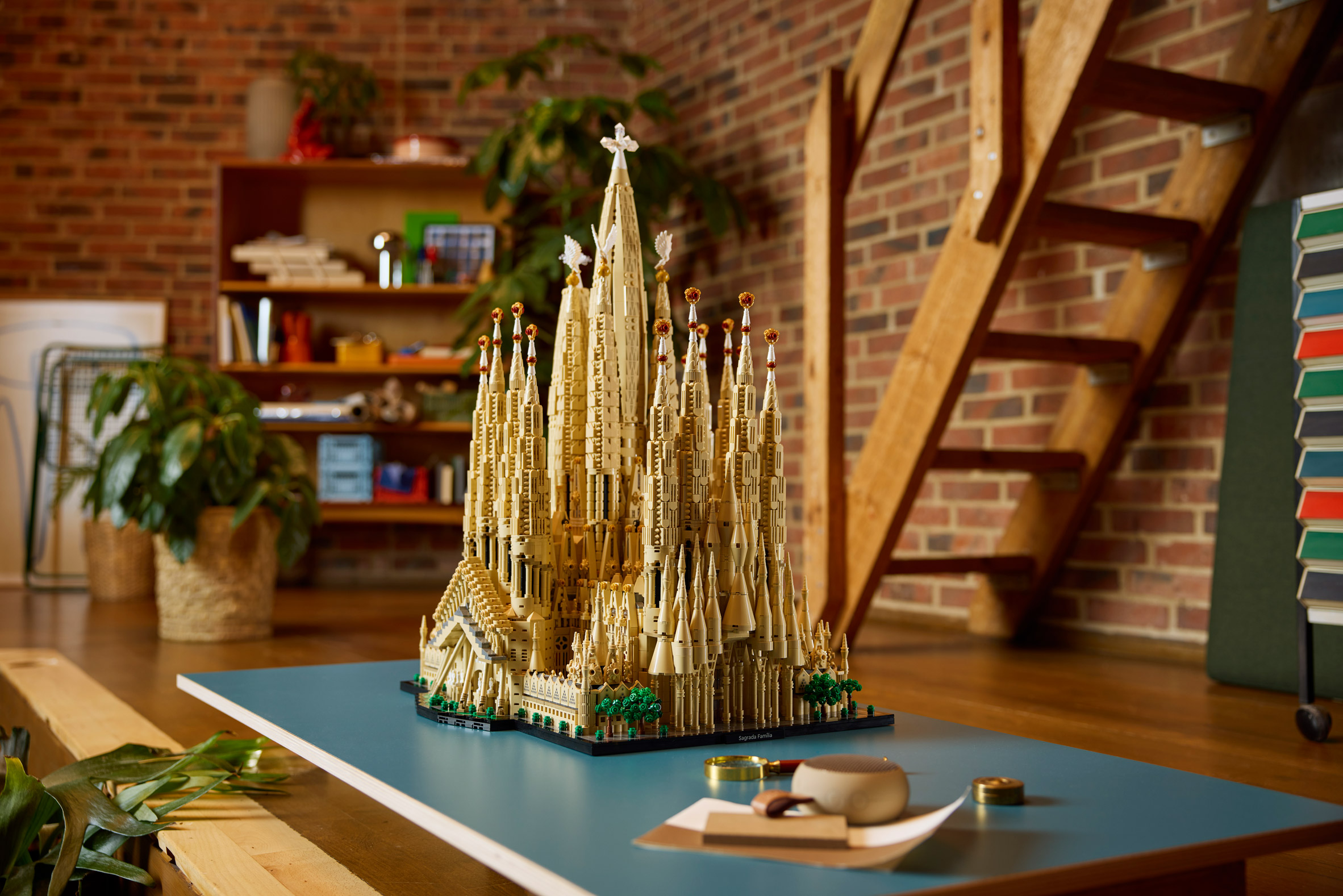
In 1926 Gaudí was struck by a tram. The Sagrada Família was barely a quarter built. He had always known he would not see it finished, and he had designed it that way on purpose.
The building has been continued for a century by people who never met him. It completes this year. No architect alive started it, and the building has been carried forward by his intent, not by his presence. That is the rarest achievement in the profession: a design that kept its meaning across a hundred years and dozens of hands, with the author gone almost from the beginning.
Most architects treat this as a one-of-a-kind story. It is not. It is your problem too, just on a shorter clock.
You leave every project long before the building is finished. The only question is whether the design can still speak once you are not in the room.
You go on leave. You change firms. You hand the job to a junior, a contractor, a successor practice, a client who keeps building for another decade. Every one of those is a small death of your presence on the project. And in every one, an undocumented design quietly gets reinterpreted, value-engineered, or guessed at, because the reasoning lived only in your head.
Gaudí is useful because he faced the absolute version of this and beat it. Below are three questions, drawn directly from how he worked, that test whether your design can survive your absence. Call it the Gaudí Test. Run it on any decision before it becomes a drawing.
Three questions that test whether a design can outlive you on the project.
If you never explained this again, would the reasoning survive?
He found his forms with hanging chain models. Weighted chains, pulled by gravity into catenary curves, then flipped upright into vaults and arches. The form was the visible result of a logic anyone could re-run. The reasoning was not stored next to the design. It was built into it.
A drawing records what, almost never why. The geometry can be copied by anyone; the intent behind it cannot be recovered once you are gone to explain it. When the why is missing, the next person keeps the shape and loses the point. Capturing the reasoning, not just the geometry, is what lets a design be defended, adapted, and continued without you.
- →Beside the form, record the force it answers: site, structure, light, programme, brief, or code.
- →Write the generative logic, not just the outcome. Could someone regenerate this decision from the reasoning, the way the chains regenerate the curve?
- →If the only honest reason is “I preferred it,” label it as taste so a successor knows it is yours to keep or change, not a constraint to preserve blindly.
Could the next person continue this, or only copy it?
He fixed the principles and deliberately left detail open for others to resolve within them. He knew successors would design parts he never drew. By separating what had to hold from what was free, he made the project continuable instead of frozen.
A design that fixes everything cannot be carried forward, because the moment reality shifts there is no room to respond, and no one knows which moves were load-bearing. A design that fixes nothing dissolves into whoever touches it next. Continuation needs a clear line between the intent that must survive and the detail that is allowed to change.
- →State the non-negotiable intent in one sentence a colleague could act on without you present.
- →Mark explicitly what is fixed and what is open, so a successor adapts the detail without breaking the idea.
- →Hand over principles, not just pictures. A render shows one resolved instance; a principle survives a hundred.
Does this live anywhere but your head and a pretty image?
He worked in plaster models, physical intuition, and reasoning, not seductive finished views. The intent lived in the most durable and legible medium available to him. The models could be read, rebuilt, and reasoned from long after he was gone.
This is the sharpest test in the AI era. It is now trivial to produce a beautiful image of an idea you have not resolved, and a polished render ages into a record of appearance with no reasoning attached. The most impressive output is rarely the most durable one. What survives you is the medium that still explains the why in ten years and three staff changes.
- →Capture the intent in something readable, a written rationale or a model, before the hero image is made.
- →Treat the render as communication of appearance, not as the record of the idea. Do not let it become the only thing left behind.
- →Ask the durability question directly: if this lands on a stranger's desk in a decade, what here still tells them what you meant?
The one-page version.
Before a significant decision becomes a drawing, complete these three lines. If a line has no clear answer, the design cannot yet survive your absence.
If I never explain this again, the reasoning is recorded in ___________.
The why, captured beside the geometry. Not in my head.
What must hold: ___________. What is open: ___________.
So a successor adapts the detail without breaking the intent.
The durable record of this design lives in ___________.
A medium that still explains the intent in 10 years, not only a render.
A design you cannot leave behind is a design that dies with you.
Gaudí proved the opposite is possible. Not with better drawings, but with clearer intent. The tool changes. The thinking does not.
If this was useful, I write about AI-augmented architectural workflow most weeks here in the resources. I would be glad to hear how you would adapt the test to your own practice.