What Architects can learn from Brick Economy
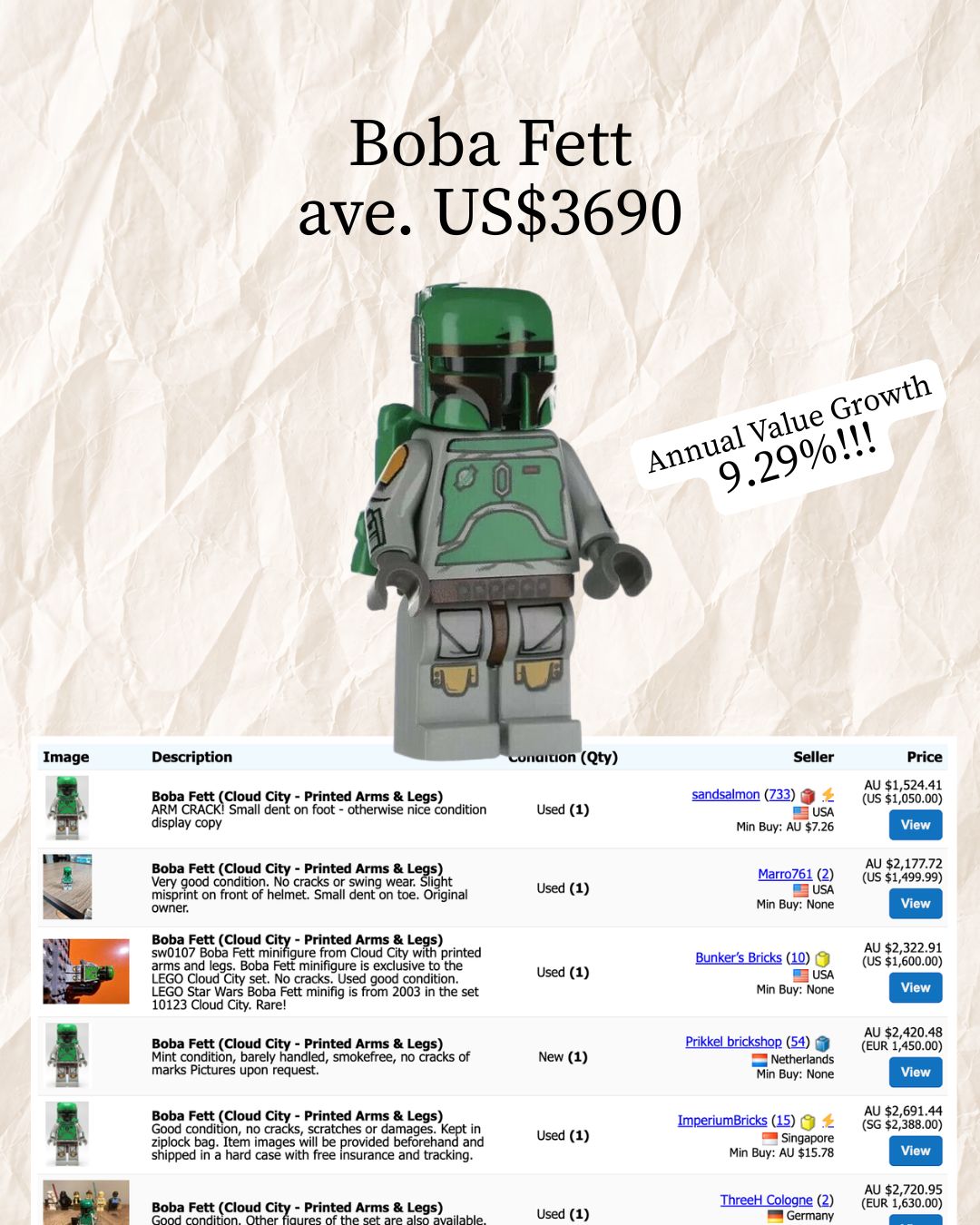
What can architects learn from a A$3,690 piece of plastic?
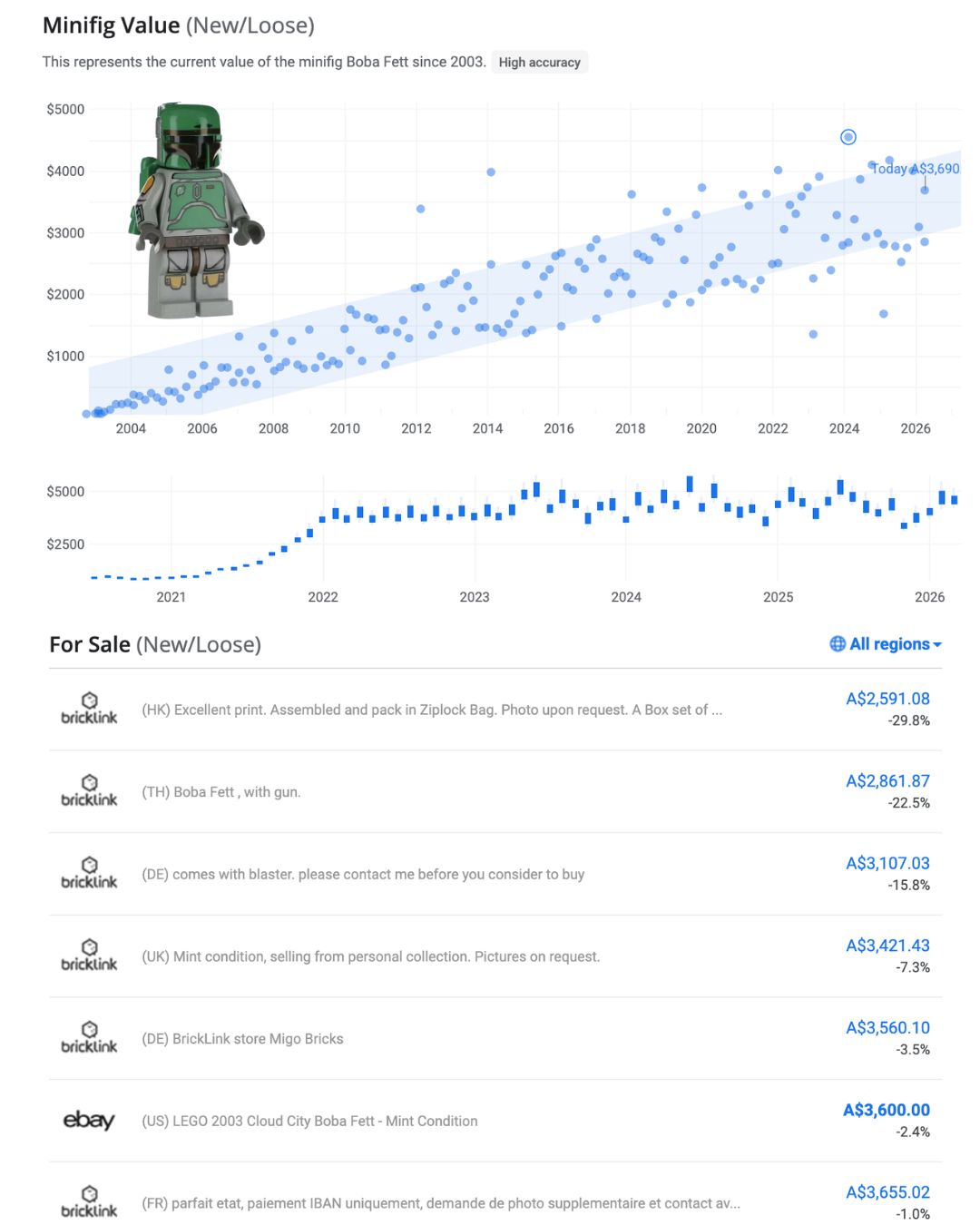
Since 2003, the Cloud City Boba Fett LEGO minifigure has compounded in value at 9.29% annually, matching the historical average of the S&P 500. At the top of the collector's market, mint-condition versions now fetch $7,000.
What makes boba fett special is because of "arms and leg printing". It is unique because at the time, no other minifigure had printing on the arms and legs. Boba Fett was the first, and it was only available in one set that was quickly discontinued.
Mr. Gold: with only 5,000 ever made, commands up to $11,000.
And the Spider-Man from San Diego Comic-Con 2013, handed to fewer than 125 people at the Marvel booth? Verified sales north of $25,000.
The reason across every single one of them is the same: unprecedented detail, locked inside genuine scarcity.
Here's what architects can learn:
Too many practices operate with a service-provider mindset: answer the brief, issue the CAD, wait for instructions. You become a commodity, and the market will push your fees to the floor without hesitation.
Good architecture creates immense, quantifiable value. It maximises site yield, builds commercial leverage, and drives real ROI.
But clients will never pay for that value if they're afraid the design will blow out the build. To escape the commodity trap, you have to offer the arm-and-leg printing. You have to stop being a service provider and become a professional partner who protects the client's investment.
After 20 years working across both sides of the site fence, here is what that scarcity looks like in practice:
The Reliable Estimate
The rarest skill in architecture isn't drawing a compelling form. It's proving that form can be built for the number on the page. No bloated contingencies. No late-stage value-engineering that strips the soul from the building.
Protecting the ROI
It's mapping the 12-month construction program at the schematic phase. It's understanding exactly how Melbourne's shifting planning schemes and statutory updates reshape the financial model, and designing preemptively around those constraints, not reactively after they've already cost the client money.
The Dual Mindset
It's holding a Master Builder's vision while applying a project manager's logic to the dirt. It's engineering constructability into the project's DNA: resolving structural and logistical friction on paper so it doesn't become a budget blowout, a program delay, or a site failure subject to forensic investigation.
The clients who matter aren't choosing on price. They're choosing based on confidence.
You build that confidence by demonstrating a grasp of commercial and physical realities from day one, not just by how well you design, but by proving the design works.
That's your arm-and-leg printing. That's your scarcity.
Build it.