AI is now inside your competitor's RFP. (seriously)
Six moves. Six prompts. Steal them for your next bid.
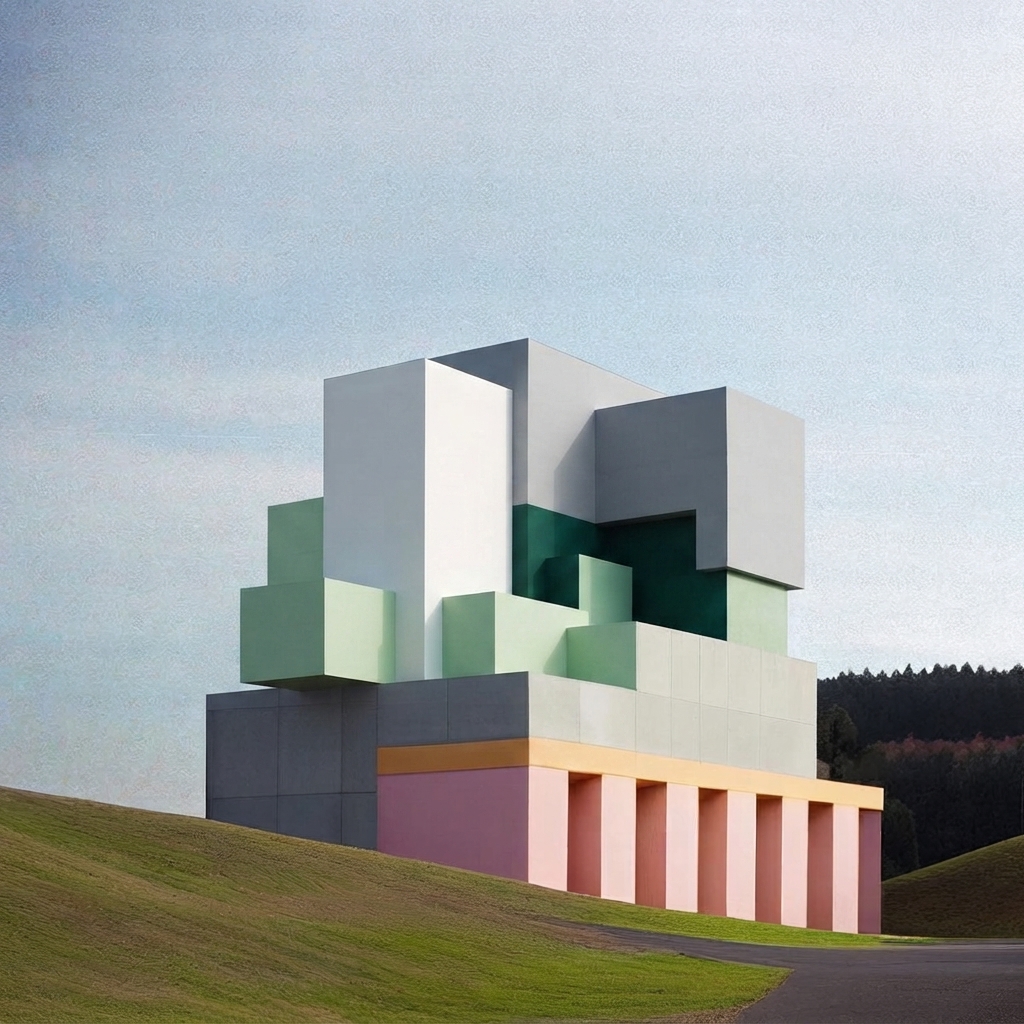
Here is the uncomfortable part.
Your competitor is already doing this.
Not designing the building with AI. That is not the point, and it is not what wins the job.
They are using it for everything underneath the bid. The cost. The program. The fit to the brief. The compliance. The way the whole thing is put together.
The parts that always got squeezed, because there was never enough time.
This is not a think-piece. Every move below comes with a prompt you can copy, paste, fill in the [bracketed bits], and use today.
Two things before we start
- Save this page. Block an hour before your next RFP is due.
- Send it to the one person on your team who is quietly worried they are falling behind on AI. You know who.
Move 01A picture of where it could go
This is the one that changed everything.
Before, nobody committed design time to a bid. Too risky. So you described the direction in words, and hoped the panel could picture it.
Now you put an actual image in front of them.
Not the design. A massing study. A mood. A direction. When everyone else brought words, you brought a picture. That is the whole game.
A 1,600 m² community performance centre. Corner site, regional Victoria. The brief wants "warm, civic, timber-forward." You have no time to draw.
Do this
- Open your image tool (GPT Image, Midjourney, Nano Banana, whatever you use).
- Paste the prompt below.
- Swap the [brackets] for your project.
- Generate three or four. Pick the one that feels right.
Architectural CONCEPT massing image, not a construction drawing.
Subject: a [building type, e.g. community performance centre] of
roughly [GFA] on [site: corner / sloping / coastal / infill].
Massing: [low-slung and horizontal / a single clear volume /
a cluster of gabled forms].
Material and mood: [warm timber and brick], [civic, calm, welcoming].
Context: [regional Australian town], [native landscape, mature gums].
Light: soft late-afternoon golden hour, gentle long shadows.
Camera: eye-level three-quarter view, 35mm, realistic proportions.
Style: photoreal architectural visualisation, physically plausible,
restrained. No text, no crowds, no surreal geometry.
Then show the range. Iteration is free now, so give them options, not one hero shot.
Keep the EXACT massing, camera and composition of the previous image.
Change only the material language to [new palette, e.g. red brick +
weathered zinc]. Everything else identical. Generate 3 variations.
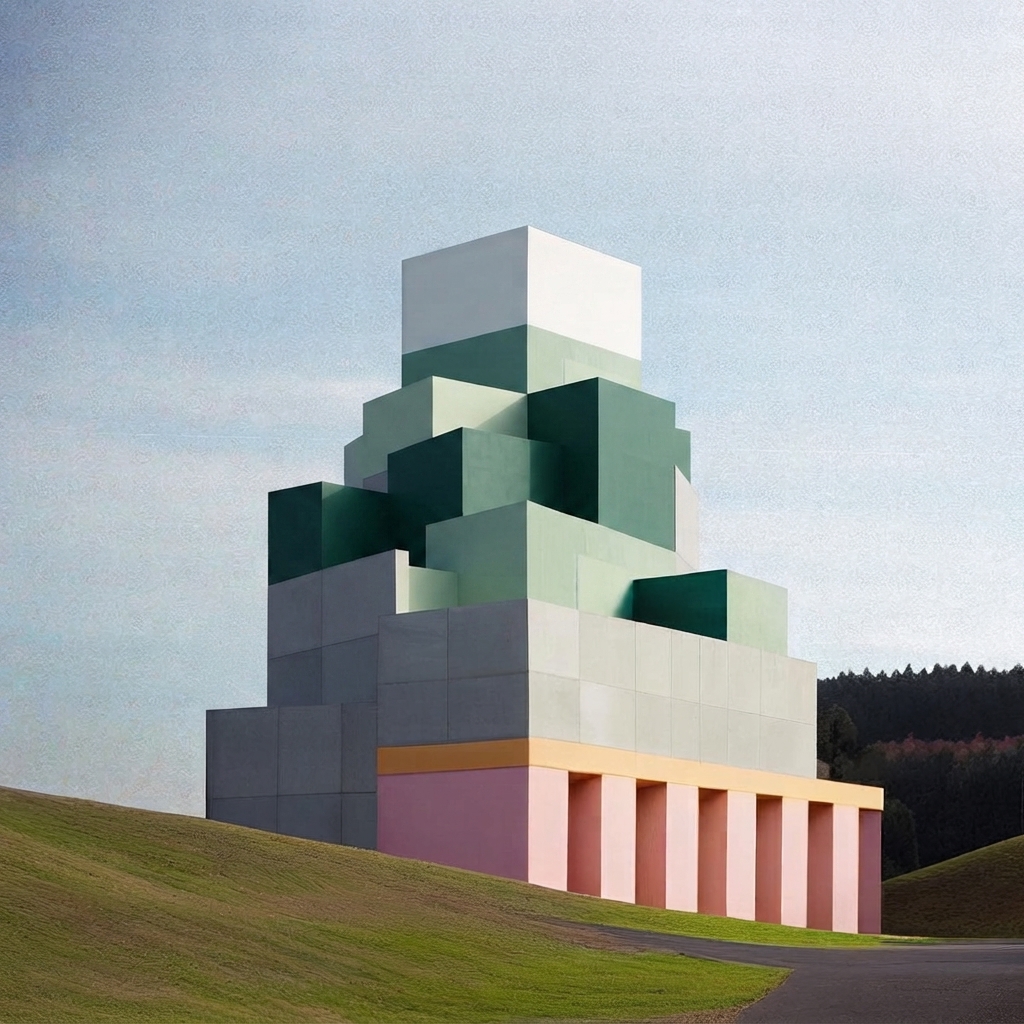
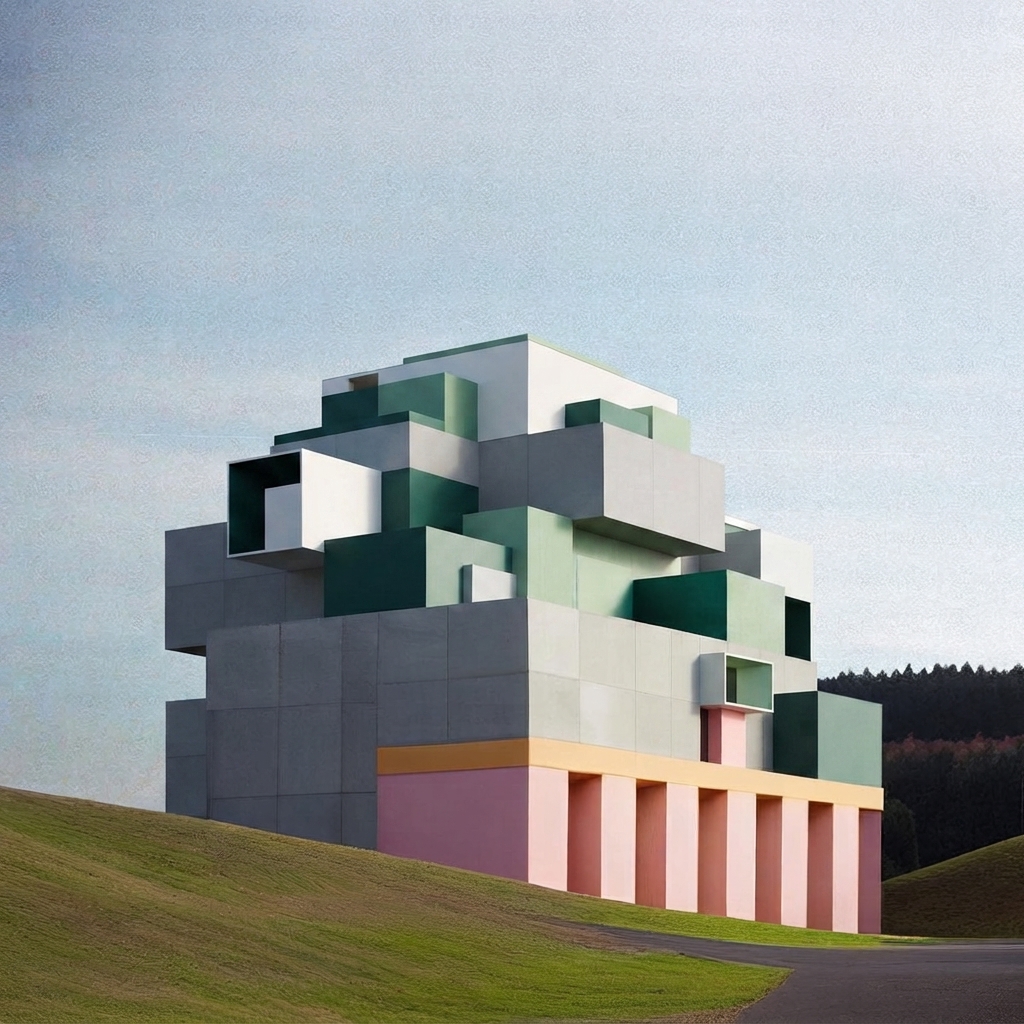
What you get: the same brief, resolved two ways, in one afternoon.
And it does not stop at the outside. Show them the feeling inside too.
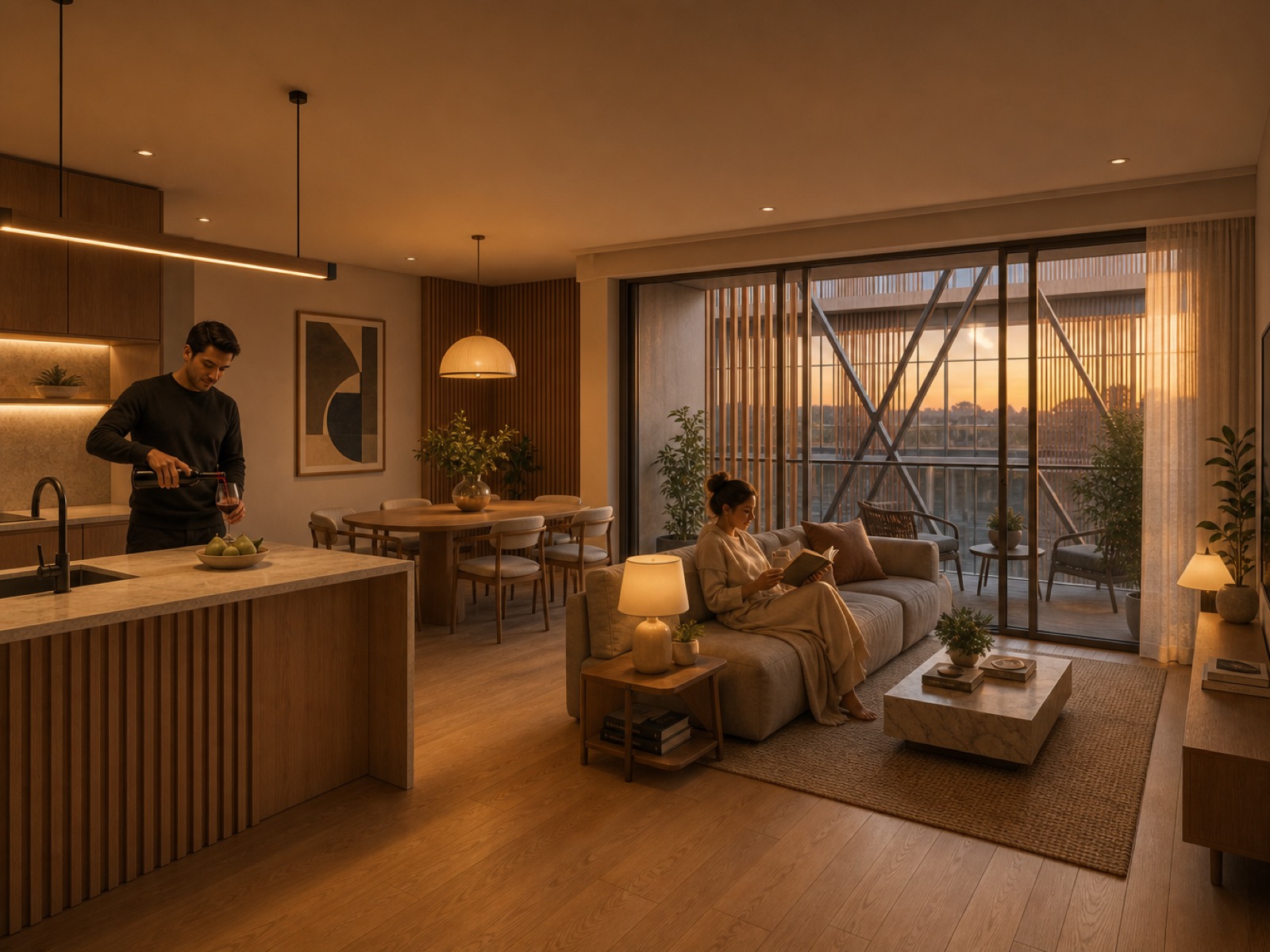
Check it: caption it "indicative concept, not a design proposal." It shows intent. It keeps you off the hook for the design.
Move 02"So what will it cost?"
They ask this in the first meeting. Every time.
The old answer: "we can't say until there's design to price." True, but it lands badly, and the number they are guessing is usually worse than the real one.
Now you give them a grounded range on the spot. Then you check it against numbers you actually trust.
Same centre. Single storey, mid spec, one acoustic hall. The client keeps asking, "roughly, eight million or fifteen?"
Do this
- Open Claude or ChatGPT.
- Paste the prompt. Fill in your project.
- Read the assumptions it lists. That is where the judgement lives.
- Sense-check the number against a real project you know.
You are helping an architect give a client an early, honest cost
RANGE at RFP stage. This is NOT a quantity surveyor's estimate.

Project: [building type], approx [GFA] m² GFA, [storeys] storey(s),
in [location, e.g. regional Victoria].
Quality: [basic / mid / high]. Special elements: [acoustic hall,
commercial kitchen, etc.].

Do this:
1. Give a $/m² range from comparable [building type] projects in
   [region], as low-high.
2. Multiply out to a total construction cost range.
3. List the 5 assumptions that move the number the most.
4. Say what pushes it to the top of the range, and what pulls it down.
5. Label it clearly as an OPINION OF PROBABLE COST only: indicative,
   to be verified by a quantity surveyor, not a fixed price or guarantee.
Keep it to one page.
Check it: in the RFP, label it plainly as an opinion of probable cost only, prepared to inform early discussion and to be verified by a quantity surveyor. A range with assumptions, never a fixed price or guarantee. That one line keeps the conversation honest and keeps you protected.
Move 03"And can I hit my date?"
The client already has a date in their head.
Doors open by October. The festival. The school year. It quietly drives everything, and nobody stress-tests it until it is too late.
You test it now, at bid stage, and you look like the only firm who thought about it.
The client wants the centre open for a festival in October next year. Is that real, or should you be managing it in the bid?
Do this
- Paste the prompt with your target date and rough scale.
- Let it build the program backwards from the date.
- Look at the latest-start dates. That tells you the truth.
You are helping an architect sanity-check whether a project can
realistically be delivered by a target date, at RFP stage.

Target: [facility] operational and open by [target date].
Scale: approx [GFA] m², [construction type].
Known constraints: [planning pathway, e.g. needs a permit],
[funding milestone], [site available from date].

Do this:
1. Build a high-level program working BACKWARDS from the target:
   design, approvals, tender, construction, commissioning, fit-out.
2. Give realistic durations for each phase for this scale in Australia.
3. Name the 3 biggest risks to the date (long-lead items, approvals,
   weather, procurement).
4. Give the LATEST start date for each phase to still hit the target.
5. Say plainly: achievable, tight, or unrealistic, and why.
Check it: if a phase has to start before you would even be appointed, say so in the bid. Clients trust honesty on time far more than optimism.
Move 04A response shaped to the brief
Answering the brief is the easy half.
The hard half is the criteria they did not write down. The fear. The last project that blew out. The thing the panel actually cares about but never puts on paper.
Two prompts. The first maps your response to what they said. The second guesses what they did not.
A small council. The RFP lists design, experience, price. But they got burned by a cost blow-out last time. The real criterion is certainty, and the winning bid speaks to it quietly, everywhere.

Do this
- Paste the whole RFP into Prompt A. Get your response map.
- Run Prompt B on the same brief. Get the unspoken list.
- Weave one reassurance for each unspoken fear through your response.
Here is an RFP / brief:
[PASTE THE RFP TEXT]

Do this:
1. Extract every stated requirement and evaluation criterion into a
   table: Requirement | Where it appears | What a strong response
   must show.
2. Draft a one-line response angle for each, playing to [my firm's
   strength, e.g. community consultation / heritage / ESD].
3. Flag any requirement I have NOT obviously addressed.
Return as a table I can drop straight into my response outline.
Same brief. The client is a [client type: council / school / church /
health service]. List the UNSPOKEN priorities they are likely weighing
but did not write down (risk, certainty, reputation, community
backlash, budget nervousness, timeline, ongoing running costs).
For each, give ONE sentence I could weave into the response to quietly
reassure them, without naming the fear directly.
Check it: the unspoken list is a hypothesis. Test it against what you know of the people actually on the panel.
Move 05Nothing missed at lodging
You lose bids you should have won on technicalities.
A page limit you blew. A form you forgot. The portal that closed at 2pm, not 5.
The old safety net was one tired read-through the night before. Replace it.
The RFP buries a 20-page limit, a mandatory conflict-of-interest form, and a 2pm portal deadline in three different sections. Miss one, lose the bid.
Do this
- Paste the "how to respond" section into the first prompt. Get a checklist.
- Paste your draft contents into the second prompt.
- Fix every gap it flags. Do this the day before, not the hour before.
Here is the submission-requirements section of an RFP:
[PASTE THE "HOW TO RESPOND" / SUBMISSION REQUIREMENTS TEXT]

1. Turn it into a compliance checklist: every required item, format
   rule, page or word limit, mandatory form, and attachment.
2. Note the exact submission method and deadline (date, time, portal).
Then wait. I will paste my draft contents next.
Here is my draft package contents:
[PASTE YOUR TABLE OF CONTENTS / SECTION LIST]

Check it against the checklist above. List every gap or breach, most
serious first. For each, tell me exactly what to fix.
Check it: a submission rejected on a technicality is the most avoidable loss in this business.
Move 06A package that sets itself out
The shape of the thing matters more than people admit.
Set the template up once. Cover page, chapter dividers, a consistent order. Then AI fills it fast and keeps it consistent, even at 11pm on the deadline.
Do this
- Copy the structure below. Save it as your firm's standard.
- Build each section against it.
- Write the executive summary last, with the second prompt.
RFP RESPONSE — STANDARD STRUCTURE

0. Cover page        (project, client, our firm, date, RFP reference)
1. Executive summary (1 page, weighted to their evaluation criteria)
2. Understanding of the brief and site
3. Design approach   (with indicative massing image)
4. Team and relevant experience
5. Methodology and program (with key dates)
6. Indicative cost approach
7. Value, sustainability and risk
8. Compliance schedule and required forms

Each section: its own divider page, consistent header, page numbers.
Draft a one-page executive summary for our RFP response.

Evaluation criteria and weightings: [e.g. Design 30%, Experience 25%,
Methodology 20%, Price 15%, ESD 10%].
Our three strongest points: [list them].

Rules:
- Lead with what scores highest.
- One short paragraph per criterion, in order of weighting.
- Plain, confident, human. Australian English.
- No filler, no "we are excited to", no stock phrases.
Check it: read it out loud. If it sounds like a template, rewrite the first sentence so it is about them, not you.
The part AI can't do
Everything above is the easy half. The clean, fast, step-by-step half.
You are still the one who reads the room.
Who knows which image to show.
Who hears the fear the client did not say out loud.
Who decides which number you will actually stand behind.
That half does not download.
The design was never the part AI was going to take. Everything underneath it is where you win.
Do these on your next RFP.
Comment "RFP" and I will send you the full toolkit as a file you can keep.
And if you know someone quietly worried they are falling behind, send this to them. That is how it spreads.