One wheel. Every move you actually make.
Every skill and knowledge base I've published, compiled into one framework. Seven branches, twenty-one moves, in the order a real project actually needs them — and the whole thing is free to download.
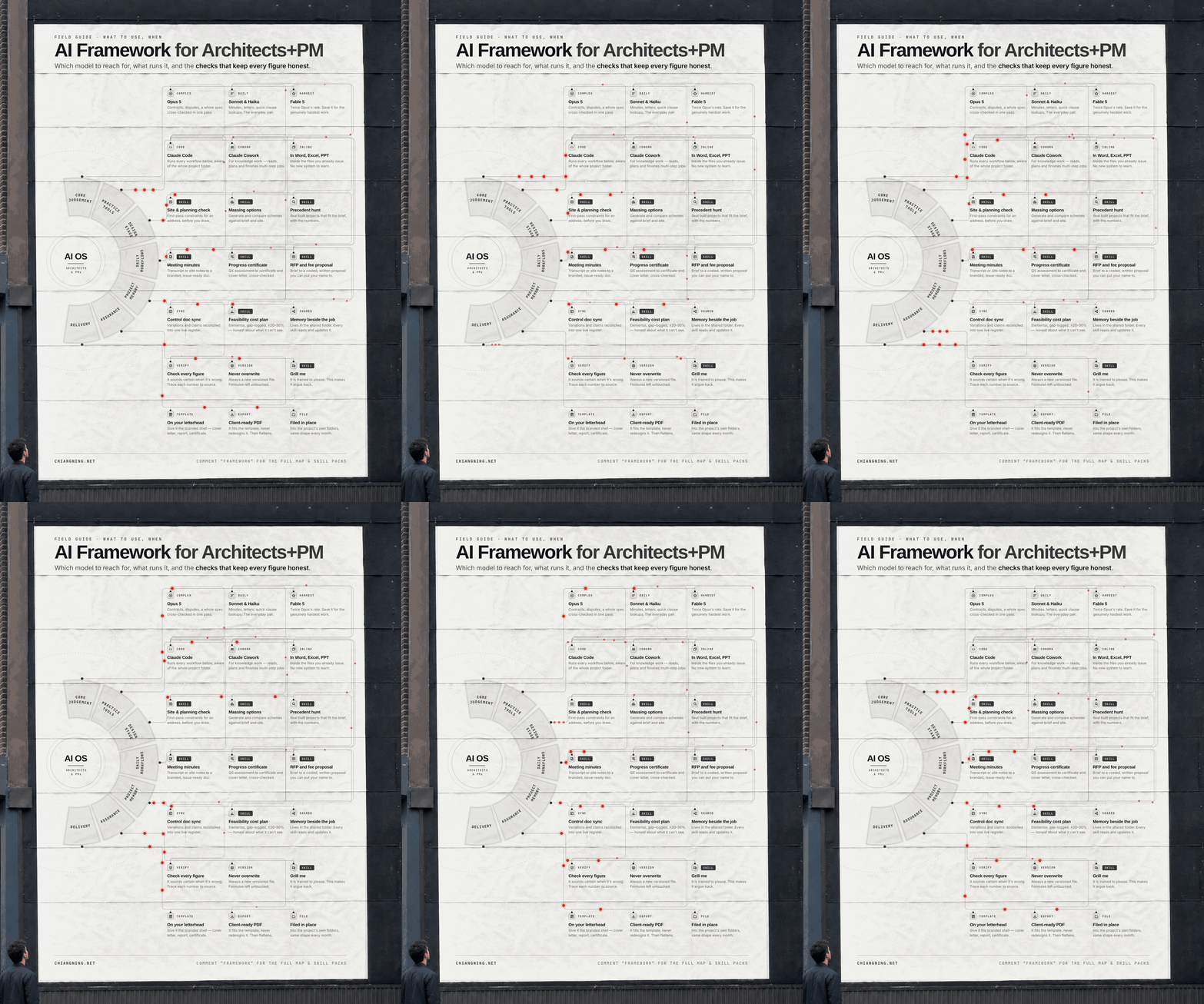
Every skill I've published lives in its own article.
Meeting minutes has one. Progress certificates has one. The fee proposal has one. Nine skills here, seventeen there, twenty-five in the big one. Each is complete on its own, and none of them tell you how the pieces sit next to each other.
So this is the missing page: the one wheel that shows which model tier to reach for, which Claude surface actually runs the work, where the design-stage skills sit before the paperwork starts, and the three checks that stand between a draft and something you'd put your name to.
Nothing on this wheel is new. It's a map of what's already live, arranged so you can see the shape of the whole practice at once — and every piece of it is a free download, no email wall.
The whole framework, as one pack
Every skill behind the wheel in a single folder, 56 of them, plus a README carrying the guidelines: which model tier to reach for, and the 3 checks that stand between a draft and a signature. This is the five packs on this site merged and de-duplicated, so you install once instead of five times. No email wall, no sign-up.
Download the pack (.zip)A card tagged SKILL is a real, downloadable SKILL.md — the link under it names the pack it ships in. A plain card is a model, a tool or a habit, not a file. Nobody needs a skill to open Claude Code; you do need one to make it check a claim the same way every month.
- Core Judgement — which model, and why it matters more than you'd think
- Practice Tools — the three surfaces that actually run the work
- Design Stage — before the paperwork starts
- Daily Workflows — the three documents that eat the most hours
- Project Memory — what has to survive the session ending
- Assurance — the three checks between a draft and your name on it
- Delivery — getting it out the door, the same way every time
- What the wheel can't do
Branch 01 · Core JudgementWhich model, and why it matters more than you'd think
Like knowing which colleague to hand a task to — the graduate for a quick lookup, the senior associate for the contract, and the specialist you only call in when it's genuinely hard.
This is the one branch with a real cost trap in it. Claude's four tiers aren't priced the way people assume.
Contracts, disputes, a whole spec cross-checked in one pass. Reach for this when getting it wrong is expensive.
Minutes, letters, a quick clause lookup. The pair that should be doing most of your daily volume.
Anthropic's most capable model, and priced like it: roughly twice Opus 5's rate. Save it for the work that's genuinely at the edge of what any model can do — not the default.
The one mistake: reaching for the most capable model by habit. The most expensive tier isn't the safest choice, it's the most wasteful one on anything that Sonnet already handles well.
Branch 02 · Practice ToolsThe three surfaces that actually run the work
Like choosing between the terminal, a project manager, and a colleague who's just quietly good with Excel — same underlying intelligence, three different jobs.
The model is the engine. These are the three places it actually sits while you work.
Runs every workflow in this framework, aware of the whole project folder at once. If a job touches more than one file, this is where it happens.
For knowledge work that isn't code — reads, plans and finishes multi-step jobs where the deliverable is a document, not a repo.
Inside the files you already issue. No new system to learn, and the format nobody on the other end of the email has to be told how to open.
If you want the fuller version of this branch on its own, I wrote Claude Has 5 Surfaces. Most Architects Use One. — it covers the other two (the app and the API) that don't come up in daily practice work.
Branch 03 · Design StageBefore the paperwork starts
Like the first week on a new job, when you're reading the title, the controls and every project that's tried something similar before you've drawn a line.
This is the branch every other skill pack I've published skips over. It's the one I added last, because it was the actual gap in the framework, not a hole in the poster.
A first-pass constraints read for an address, before you draw — plot ratio, setbacks, overlays, the things that change the brief before the first sketch.
Generates and compares early massing against the brief and the site, so the first client conversation starts from three options instead of one guess.
Digs across sources for real, built precedents that fit the brief and hands back the ones that actually matter, not a mood board.
Branch 04 · Daily WorkflowsThe three documents that eat the most hours
Like the associate who never misses a Friday deadline, because the format is fixed and the only thing that changes each week is the content.
Not the hardest work on a project. Just the most repetitive, and the easiest to get quietly wrong under a deadline.
Turns a transcript or scrawled site notes into a branded, issue-ready document — same structure, same house style, every time.
The QS assessment, driven into a certificate and cover letter, cross-checked as it goes rather than assessed on impression.
A brief turned into a costed, written proposal you can put your name to, staged phase by phase rather than one lump sum.
Branch 05 · Project MemoryWhat has to survive the session ending
Like the project file that outlives everyone who's touched the job — the thing a new PM should be able to read cold and understand where things stand.
Every chat window closes eventually. This branch is what's still true after it does.
Variations and claims reconciled into one live register, kept as a file beside the job rather than a chat history nobody can search.
Elemental, gap-logged, ±20–30% — honest about what it can't see rather than confidently wrong.
Lives in the shared project folder, not in a chat app's private history. Every skill above reads it before starting and updates it when it's done.
Why a file, not a chat: a Claude Project only ever holds a snapshot someone uploaded. A file in the shared project folder stays live, and everyone on the job already has access to the folder.
Branch 06 · AssuranceThe three checks between a draft and your name on it
Like the senior partner who reads the letter before it goes out, not because they don't trust you, but because a plausible number and a correct one read identically until someone checks.
This is the branch that keeps the other six honest. Skip it and the whole framework is just a faster way to send an unverified document.
It sounds certain when it's wrong. Every number gets traced back to its source before it leaves the office, not sampled.
Always a new versioned file. Formulas and the accountant's cells stay untouched, and the original is never at risk.
It's trained to please, so it won't warn you off a thin brief on its own. This is the skill that makes it argue back — one theme at a time, until nothing is left vague.
Branch 07 · DeliveryGetting it out the door, the same way every time
Like the practice's own drawing template — nobody redesigns the title block for every job, they just fill it in and issue it.
The last branch is deliberately the least exciting one. That's the point: delivery should be boring, because boring is repeatable.
Give it the branded shell — cover letter, report, certificate — once, and every output after that fills the template instead of reinventing it.
It fills the template, never redesigns it, then flattens to a PDF that reads the same on every screen it lands on.
Straight into the project's own folder structure. Same shape every month, so nothing gets rebuilt from scratch.
Notice the same rule shows up on three different branches. Trace every figure to a source. Keep the original untouched. Never let a plausible answer pass as a checked one.
What the wheel can't do
Twenty-one moves, and every one of them clears the assembly — the drafting, the reconciling, the first pass at a document that used to take an evening.
None of them will stand on site and tell you the blockwork isn't the standard you specified. None of them know which fights are worth having with this client, on this job, this week. None of them will read a planning officer's tone in a meeting and know the application just changed shape.
And none of them decide what you're willing to put your name to.
That's still the whole job. The framework just means the twenty-one small decisions around it stop eating the time you need for the one big one.
Or take them a pack at a time. Each of these is the original, free, no email wall: Simplify Scope, Fee, Claim, Certificate · Claude Secret Codes for Architects · The Fee Proposal Workflow · The AI + Architecture Playbook · The Monthly Report Workflow.
Comment “Framework” on the LinkedIn post and I'll send you the full map plus the pack that matches what you're stuck on this week.